Reduviidae, Triatominae
The triatomines,
vectors of Trypanosoma cruzi (Chagas disease)
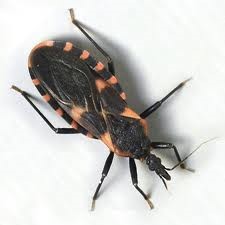
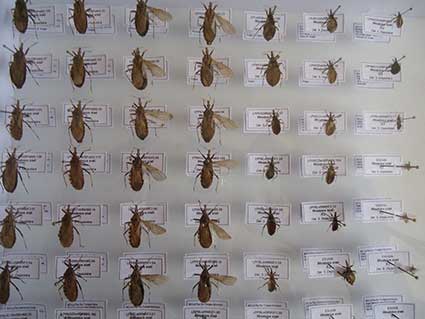
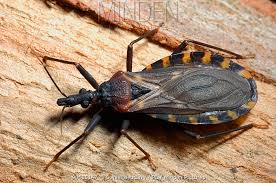

- Reduviidae, Triatominae
- The List of Triatomine Bugs in Bolivia
- A brief introduction to triatomines, with a particular focus on Bolivia
- Diversity of Triatomines
- Ecological Distribution and Bioecology
- Vectorial capacity and determinants of transmission
- Epidemiological Significance and Transmission Dynamics
- Forest Transmission and Amazonian Characteristics
- Assessment of Vector Capacity
- Vector Control
- The genus Rhodnius in Bolivia
- The genus Triatoma in Bolivia
- Distinctive Features of the Bolivian Fauna
- Conclusion
- Bibliography
The List of Triatomine Bugs in Bolivia
Click on the species name to view its fact sheet.
|
|
|
|
|
|
|
|---|---|---|---|---|---|
A brief introduction to triatomines, with a particular focus on Bolivia
Triatomine bugs (Hemiptera: Reduviidae: Triatominae) comprise a group of hematophagous insects including nearly 160 described species, distributed mainly throughout the Americas, from the southern United States to Argentina and Chile (Ceccarelli et al., 2025; Lent & Wygodzinsky, 1979). Although most species occupy sylvatic habitats and maintain natural cycles involving various vertebrate hosts, some have adapted to peridomestic and domestic environments, where they play a major role in the transmission of Trypanosoma cruzi, the causative agent of Chagas disease. Because of their medical and veterinary importance, triatomine bugs have been the subject of extensive research addressing their taxonomy, bionomics, population dynamics, and role in vector-borne transmission.
Bolivia occupies a particular place in the epidemiology of Chagas disease, as it has historically had one of the highest human prevalences of T. cruzi infection in Latin America (Araújo-Jorge & Medrano-Mercado, 2009). This situation results from the interaction between a diverse triatomine fauna, ecological conditions favorable to their development, and socioeconomic factors that for many years favored the colonization of human dwellings, particularly by Triatoma infestans, which is the major vector of the disease in Bolivia. The country is also characterized by the coexistence of domestic, peridomestic, and sylvatic populations of several vector species, creating a continuous ecological gradient that is particularly conducive to parasite circulation (Dujardin et al., 2002).
Triatoma infestans
As the main vector of Trypanosoma cruzi in Bolivia, this species readily colonizes rural dwellings built of adobe or tabique. Its adaptation to the domestic environment and its close proximity to human populations make it one of the most efficient vectors of Chagas disease.
Diversity of Triatomines
The Bolivian Triatominae fauna is among the most diverse in South America, with 23 species belonging to six genera included in this synthesis: Eratyrus mucronatus; Microtriatoma trinidadensis; Panstrongylus dias, P. geniculatus, P. guentheri, P. megistus, P. noireaui, and P. rufotuberculatus; Psammolestes coreodes; Rhodnius micki, R. montenegrensis, R. pictipes, R. robustus, and R. stali; as well as Triatoma boliviana, T. breyeri, T. delpontei, T. guasayana, T. infestans, T. matogrossensis, T. platensis, T. pseudomaculata, and T. sordida. This taxonomic diversity is accompanied by substantial ecological diversity: the species occupy very different ecotopes, ranging from rocky outcrops and small-mammal burrows to tree cavities, bromeliads, bird nests, and palms. Several species have also been described or recognized only recently, notably Rhodnius micki, R. montenegrensis, and Panstrongylus noireaui, highlighting that the diversity of Bolivian Triatominae may continue to evolve as taxonomic knowledge improves. Distinguishing closely related species can also be difficult based on morphology alone, making integrative approaches combining morphological, morphometric, and molecular characters particularly important (Zhao et al., 2021; Gil-Santana et al., 2022; Lardeux et al., 2024).
However, not all of these species have the same epidemiological importance. Triatoma infestans remains the dominant species and, historically, the main domestic vector of Trypanosoma cruzi, the causative agent of Chagas disease, in Bolivia. Its importance is based on its strong adaptation to rural dwellings, particularly traditional adobe and tabique constructions, where cracks and other shelters allow colonies to become established. This species also has sylvatic populations, particularly in the Andean valleys and the Chaco, which represents an important feature of transmission in Bolivia (Noireau et al., 1995; Rojas Cortez et al., 2007).
In addition to T. infestans, several species can come into contact with human habitats and may participate, to varying degrees, in the circulation of T. cruzi. Triatoma sordida, T. guasayana, Eratyrus mucronatus, and some populations of Panstrongylus rufotuberculatus can exploit peridomestic environments and, in some populations, human dwellings. Their vector importance must nevertheless be distinguished from that of T. infestans: presence in or around houses, natural infection with T. cruzi, or even experimentally demonstrated vector competence is not sufficient to establish a substantial contribution to human transmission. The available data instead indicate a secondary or potential role that varies according to species and ecological context (Noireau et al., 1995; Noireau et al., 1997; Depickère et al., 2012).
Primarily sylvatic species constitute another important group. Several Rhodnius, particularly R. stali, R. montenegrensis, and R. pictipes, are closely associated with palms and primarily participate in sylvatic cycles of T. cruzi. In the Bolivian Amazon, R. stali and R. montenegrensis have been found in different palm genera, sometimes near human dwellings. Infected insects carrying T. cruzi have been detected, and human blood meals have also been identified in some Rhodnius, showing that the interface between sylvatic and human cycles may be locally important (Depickère et al., 2022). Rhodnius stali is a particularly interesting case in this regard, as its domiciliation has been documented in the Alto Beni (Matias et al., 2003).
Other species exhibit even more specialized ecological associations. Triatoma delpontei is strongly associated with the large nests of the monk parakeet (Myiopsitta monachus) in the Chaco, whereas Psammolestes coreodes is primarily associated with bird nests. Microtriatoma trinidadensis is essentially sylvatic, particularly in palms and mammal-associated refuges, although local reproduction has exceptionally been observed in a chicken coop in the Alto Beni. Triatoma boliviana, in turn, occupies a particular niche in the sub-Andean valleys of La Paz, where it is notably associated with piles of stones and retaining walls (tacanas) near human dwellings. These examples show that proximity to humans does not necessarily indicate domestic adaptation: some species may occasionally exploit peridomestic structures while maintaining an essentially sylvatic ecology.
Thus, the Bolivian triatomine fauna forms an ecological continuum between sylvatic, peridomestic, and domestic cycles, but this continuum should not be interpreted as a uniform succession of risk levels. Most species remain associated with sylvatic cycles, whereas T. infestans remains the principal domestic vector of T. cruzi. Some peridomestic or sylvatic species may nevertheless constitute interfaces with human populations, particularly when their natural ecotopes are located near dwellings, when adults disperse toward them, or when populations are able to establish local colonies there. Understanding Chagas disease transmission in Bolivia therefore requires simultaneous consideration of taxonomic diversity, ecotopes, degree of domiciliation, interactions with vertebrate hosts, and infection with T. cruzi, rather than treating all Triatominae as equivalent vectors.
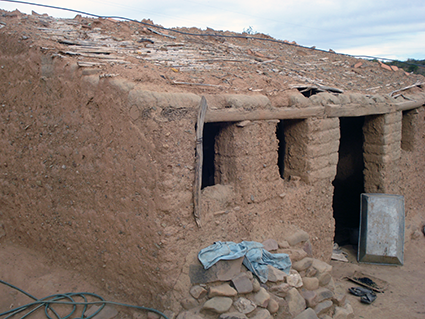
Rural dwelling in an inter-Andean valley
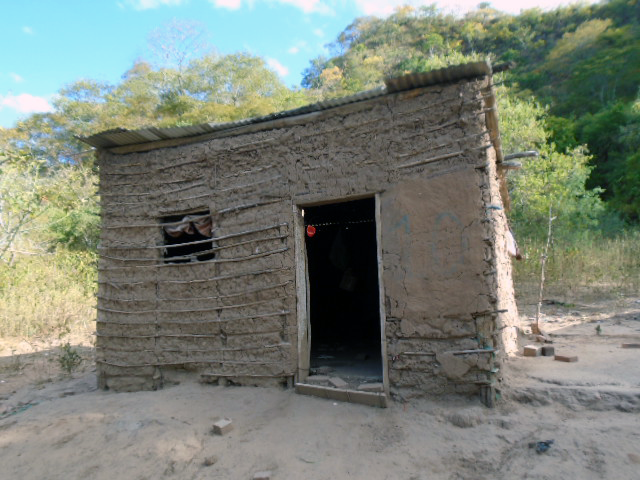
Dwelling in the Bolivian Chaco
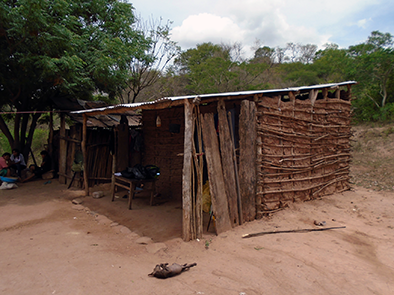
Dwelling in the Bolivian Chaco
Rural dwellings particularly favorable to the establishment of T. infestans colonies. Adobe or rammed-earth walls have numerous cracks and cavities that provide triatomines with suitable shelters for their survival, reproduction, and proliferation in close proximity to inhabitants.
Ecological Distribution and Bioecology
Triatominae are obligate hematophagous insects whose development comprises five nymphal instars before the emergence of the adult. Their survival, fecundity, and population dynamics depend in particular on host availability, temperature and humidity, as well as the structure and stability of their ecotope. In Bolivia, the great diversity of environments and animal communities results in a wide diversity of ecological associations. In general, Rhodnius are primarily associated with palms, Panstrongylus with burrows, cavities, and shelters frequented by mammals, whereas many Triatoma exploit terrestrial habitats such as rocky outcrops, burrows, dead wood, or various peridomestic shelters. These patterns nevertheless represent general associations and have exceptions; ecology should therefore be considered at the species level.
In the Andean and inter-Andean valleys, rocky ecotopes play an important role. Triatoma infestans, in particular, can colonize piles of stones and rocky outcrops, where sylvatic populations have been extensively documented in the departments of Cochabamba and La Paz. In the valleys of La Paz, sylvatic populations were detected in 17 of the 18 sylvatic areas surveyed, at elevations ranging from 2,159 to 2,864 m. At Cotapachi, in the department of Cochabamba, 330 of the 1,120 rocky ecotopes surveyed contained triatomines, 92% of which were T. infestans nymphs. These observations demonstrate that the species can maintain sylvatic populations independently of domestic colonies and represent an important feature of its ecology in Bolivia.
In the dry regions of the Chaco, triatomines exploit various natural shelters associated with vegetation and wildlife. Triatoma guasayana and T. sordida, for example, can be found in terrestrial or epiphytic bromeliads. Triatoma delpontei, in turn, shows a particularly close association with the large nests of the monk parakeet, Myiopsitta monachus. In a study conducted in an uninhabited area of the Bolivian Chaco, T. delpontei accounted for 90.2% of the triatomines collected from the nests of this bird. Sylvatic populations of T. infestans have also been found in the Chaco, particularly in tree cavities. These observations illustrate the diversity of shelters exploited by Triatominae in Bolivia’s dry environments.
In the tropical lowlands and Amazonian regions, palms constitute particularly important ecotopes for several sylvatic species, especially those of the genus Rhodnius. A study conducted in the departments of Beni and Pando collected 325 Rhodnius during surveys involving 1,200 traps placed in 238 palms, as well as in 32 burrows or ground cavities. Molecular analyses identified R. stali and R. montenegrensis, the latter corresponding to populations previously designated as R. robustus II. The insects were mainly associated with palms of the genera Attalea, Astrocaryum, Copernicia, Euterpe, and Acrocomia. This close association with palms is therefore a major component of Rhodnius ecology in the Bolivian Amazon.
The ecotopes exploited by Triatominae are not exclusively natural, however. Some species can use peridomestic or domestic habitats, creating an interface between sylvatic populations and human populations. Eratyrus mucronatus, for example, can form peridomestic colonies and enter dwellings; in the Apolo region, colonies comprising different developmental stages persisted despite several years of insecticide treatment. Panstrongylus rufotuberculatus has also formed intradomestic colonies in the Muñecas region of the department of La Paz. Rhodnius stali provides another well-documented example: adults, nymphs, and eggs were found in dwellings and peridomestic structures in the Alto Beni, demonstrating its ability to locally colonize human environments.
Conversely, several species remain essentially or primarily sylvatic, even when they may be found near human dwellings. Psammolestes coreodes is primarily associated with bird nests, whereas T. delpontei is strongly associated with the nests of Myiopsitta monachus. Microtriatoma trinidadensis is also an essentially sylvatic species, although local reproduction was exceptionally observed in a chicken coop in the Alto Beni. Triatoma boliviana, for its part, occupies a particular niche in the sub-Andean valleys of La Paz, where it is notably associated with piles of stones and retaining walls (tacanas) located near human dwellings.
The diversity of ecotopes in Bolivia thus reflects a continuum between sylvatic, peridomestic, and domestic environments, but this does not correspond to a uniform progression toward domiciliation. Some species remain closely associated with their natural habitats, whereas others may temporarily or permanently exploit human structures. The spatial proximity of these different ecotopes is nevertheless important from an epidemiological perspective, as it may facilitate contact among triatomine populations, their wild and domestic hosts, and, indirectly, human populations. The persistence of favorable sylvatic ecotopes, particularly near human dwellings, should therefore be taken into account when understanding population dynamics following vector control interventions.
Vectorial capacity and determinants of transmission
The public health importance of a triatomine species does not depend solely on its presence, but on its vectorial capacity, defined as its overall ability to transmit T. cruzi to human populations. This capacity results from the interaction of several biological and ecological factors, including population density, adult longevity, frequency of blood meals, feeding preferences, degree of domiciliation, vector competence, and the rate of natural infection (Dujardin et al., 2002).
Postprandial defecation behavior is a key determinant, as parasite transmission occurs mainly through infected feces deposited near the bite site. Thus, vectorial efficiency depends not only on the presence of the parasite, but also on the behaviors that determine its transfer to the host.
These parameters show strong spatial heterogeneity in Bolivia, related to biogeographic and climatic contrasts. T. infestans populations in the inter-Andean valleys, the Chaco, and the lowlands differ in terms of population density, habitat structure, colonization dynamics, and insecticide susceptibility, directly influencing their contribution to transmission.
Epidemiological Significance and Transmission Dynamics
The epidemiological importance of Triatominae in Bolivia is primarily related to their ability to participate in the transmission of Trypanosoma cruzi, the causative agent of Chagas disease. In triatomine bugs, transmission is stercorarian: unlike vectors that directly inoculate the pathogen during the bite, the infective forms of T. cruzi are eliminated in the insect’s feces and can enter the body through a skin lesion or mucous membranes. The temporal proximity between the blood meal, defecation, and contact of the feces with the host is therefore an important determinant of vectorial efficiency.
However, the presence of a Triatominae species in Bolivia, its natural infection with T. cruzi, or even its experimental susceptibility to the parasite does not necessarily mean that it plays an important role in human transmission. It is important to distinguish between natural infection, experimental susceptibility, vector competence, and epidemiologically significant transmission. This distinction is particularly important in Bolivia, where many species primarily participate in sylvatic cycles of the parasite, whereas domestic transmission has historically been dominated by Triatoma infestans.
Triatoma infestans remains the principal domestic vector of Chagas disease in Bolivia. Its epidemiological importance is directly related to its adaptation to human dwellings, where it can form large colonies and maintain close contact with human populations. Vector control programs have greatly reduced domestic transmission in the country, but the persistence of residual foci, reinfestation, and the existence of sylvatic populations remain important challenges for surveillance. In the Cochabamba valleys, a study of the sylvatic cycle of T. cruzi demonstrated active circulation of the parasite between sylvatic T. infestans and small mammals; approximately 60% of the T. infestans examined were infected, and only the TcI DTU of T. cruzi was detected. These sylvatic populations should therefore be considered when assessing the local persistence of the transmission cycle.
In the Amazonian regions, several Rhodnius species primarily participate in sylvatic cycles of T. cruzi, while also potentially coming into contact with human populations. In a study conducted in Beni and Pando, approximately 30% of the Rhodnius examined were infected with trypanosomatids. Among the infected individuals, 90% carried T. cruzi TcI, 3% Trypanosoma rangeli, and 7% a mixed infection with T. cruzi TcI and T. rangeli. Human blood meals were also identified in some individuals. These observations demonstrate an interface between sylvatic and human cycles, but they do not by themselves establish an important role for each of the species concerned in human transmission.
Some peridomestic or occasionally domestic species are also of particular interest. Triatoma sordida can colonize human structures and may be naturally infected with T. cruzi, but a study conducted in Bolivia estimated that the probability of parasite transmission to humans by the domestic populations investigated was low. Eratyrus mucronatus provides another notable example: in the Apolo region, colonies persisted in the peridomestic environment, and adults were observed inside dwellings after several years of insecticide-based control. The species is naturally infected with T. cruzi, but the available data do not demonstrate that it constitutes a major domestic vector in Bolivia. It should therefore be considered a potential or secondary vector, whose importance may depend strongly on the ecological context and degree of contact with humans.
Other Bolivian species have characteristics compatible with participation in the T. cruzi cycle, including Panstrongylus geniculatus, P. megistus, P. rufotuberculatus, Rhodnius pictipes, R. robustus, R. stali, and Triatoma guasayana. For these species, however, the level of evidence varies considerably, and data obtained in other countries should not be directly extrapolated to the Bolivian situation. Natural infection demonstrates contact with the parasite’s cycle, whereas experimentally demonstrated vector competence establishes the biological possibility of transmission; neither observation alone constitutes evidence of significant human transmission under natural conditions.
Thus, vector risk in Bolivia results from the interaction between triatomine infection, ecology, their ability to colonize or frequent human habitats, and their interactions with reservoir hosts of T. cruzi. Control of T. infestans has considerably reduced domestic transmission, but the persistence of sylvatic populations, contacts between natural ecotopes and dwellings, and the presence of other species capable of exploiting peridomestic environments justify continued entomological surveillance. The objective is therefore not to consider all Triatominae species as equivalent vectors, but to identify, in each local context, those that can actually facilitate parasite transmission between sylvatic, peridomestic, and human cycles.
Forest Transmission and Amazonian Characteristics
In the Amazonian regions of Bolivia, transmission of T. cruzi is primarily associated with sylvatic cycles linked to palms and forest habitats (Duran et al., 2012; Santalla et al., 2011). The vectors belong mainly to the genera Rhodnius and Panstrongylus, with a strong association with palms, which constitute essential microhabitats for their development.
In these environments, an important route of transmission is oral transmission, resulting from the accidental contamination of food or artisanal beverages prepared from fruits, particularly palm fruits. During the processing of these products, infected triatomine bugs or their feces may become incorporated into the pulp, leading to direct ingestion of the parasite. This mode of transmission is responsible for sporadic outbreaks, often characterized by clusters of cases and more severe acute clinical forms, illustrating the role of interactions between human activities and sylvatic cycles in the dynamics of Chagas disease in the Bolivian Amazon.
Assessment of Vector Capacity
Estimation of vectorial capacity is based on the analysis of several entomological indicators, including vector densities, domestic infestation rates, T. cruzi infection rates, feeding preferences, population survival, dispersal capacity, and characteristics of the life cycle. These parameters allow for a quantitative assessment of transmission potential across different ecological contexts and inform surveillance and control strategies.
Vector Control
Vector control in Bolivia is based primarily on indoor residual spraying campaigns using long-lasting insecticides, mainly pyrethroids. For several decades, the country has participated in regional Chagas disease control initiatives within the framework of the Southern Cone programs. These interventions have led to a significant reduction in domestic infestation and transmission risk in many endemic areas.
However, the long-term effectiveness of these strategies is limited by the presence of sylvatic or peridomestic populations that may recolonize dwellings (Pérez-Cascales et al., 2020), as well as by the emergence of insecticide resistance in some regions (Lardeux et al., 2010).
The genus Rhodnius in Bolivia
The genus Rhodnius constitutes one of the most important groups of Triatominae in the Bolivian lowlands. In the list considered here, five species are present: R. micki, R. montenegrensis, R. pictipes, R. robustus, and R. stali. Their study is particularly complex because of the morphological similarities among several species and the existence of cryptic species complexes. This difficulty has historically led to erroneous or imprecise identifications, particularly among R. stali, R. pictipes, and forms grouped under R. robustus.
Rhodnius stali is probably the species of the genus whose epidemiological importance is best documented in Bolivia after T. infestans. In the Alto Beni, it can exploit Attalea phalerata palms near human dwellings and form colonies in domestic and peridomestic habitats. A molecular study of populations from this region confirmed the identity of R. stali and detected T. cruzi in some specimens.
The discovery of R. micki in 2021 and the recognition of R. montenegrensis as a distinct species illustrate the recent evolution of knowledge regarding the Bolivian fauna. R. micki was described from Bolivian material and placed in the pictipes group based on morphological and morphometric characters. R. montenegrensis, in turn, was first reported in Bolivia from Beni and was subsequently found during broader surveys of the Bolivian Amazon. Molecular data showed that populations previously attributed to R. robustus II corresponded to R. montenegrensis. This taxonomic history shows that older records attributed to R. robustus or R. pictipes should be interpreted with caution when used to reconstruct species distributions or vector roles.
The genus Triatoma in Bolivia
With nine species in the list considered here, Triatoma is the most diverse genus in the Bolivian fauna: T. boliviana, T. breyeri, T. delpontei, T. guasayana, T. infestans, T. matogrossensis, T. platensis, T. pseudomaculata, and T. sordida. This diversity corresponds to a wide range of ecological profiles. T. infestans is the only species to have acquired major nationwide domestic importance, whereas the other species are primarily sylvatic or peridomestic, with varying degrees of contact with human dwellings.
The case of T. infestans is exceptional in Bolivia because of the importance and extent of its sylvatic populations. Andean colonies are notably associated with rocky outcrops, while distinct populations occur in the Chaco. This coexistence of domestic and sylvatic populations is important for entomological surveillance, as sylvatic foci may potentially contribute to the recolonization of human habitats following insecticide-based interventions. Genetic studies have also shown that Bolivian sylvatic populations are a major element in discussions concerning the origin and domestication of the species.
The other Triatoma species exhibit more specialized ecological profiles. T. guasayana is widely associated with the dry environments of the Chaco and can exploit sylvatic and peridomestic ecotopes; its morphological similarity to T. sordida represents an important identification challenge. T. delpontei is strongly associated with the nests of Myiopsitta monachus. T. boliviana has a currently known distribution that is much more restricted to the sub-Andean valleys of La Paz and is distinguished by its association with rocky structures. T. breyeri, finally, has a geographically isolated population in Bolivia, separate from the main known Argentine populations; its presence has been confirmed using both morphological and molecular approaches.
The morphological similarity among several Bolivian Triatoma species warrants some caution when interpreting historical data. The T. sordida–T. guasayana group is a classic example of taxonomic difficulty, with sometimes subtle morphological differences but more pronounced genetic and cytogenetic divergences. Likewise, T. boliviana was initially confused with T. carrioni, whereas T. breyeri requires careful differentiation from T. eratyrusiformis. These situations show that the apparent distribution of a species may depend directly on the quality of specimen identification.
Distinctive Features of the Bolivian Fauna
The main distinctive feature of the Bolivian triatomine fauna is the coexistence of strongly differentiated domestic, peridomestic, and sylvatic cycles. Triatoma infestans has historically dominated the domestic cycle, but many other species can exploit environments close to human dwellings. Some, such as R. stali, E. mucronatus, and P. rufotuberculatus, have demonstrated varying degrees of domiciliation, whereas others remain primarily sylvatic.
Bolivia also exhibits an exceptional diversity of ecotopes associated with the different groups of Triatominae: rocky outcrops in the Andes, tree cavities and bromeliads in the Chaco, bird nests, Amazonian palms, mammal burrows, and peridomestic structures. This diversity reflects the country’s strong geographic and climatic heterogeneity and partly explains the coexistence of numerous species with very different ecological strategies.
A second distinctive feature is the importance of sylvatic populations of T. infestans. Their existence, documented in the Andean valleys and the Chaco, distinguishes Bolivia from many other Southern Cone countries, where the species has primarily been studied in its domestic form. These sylvatic foci constitute an entomological reservoir that is independent of, or partially independent from, domestic populations and should be taken into account when interpreting reinfestation events.
Finally, the Bolivian fauna remains incompletely known from both taxonomic and ecological perspectives. Recent changes in the status of certain species show that national species lists may evolve as molecular data are increasingly incorporated. Comparisons of lists published at different times also reveal important differences: for example, a national list published in 2022 included 20 species and R. prolixus and T. venosa, whereas more recent data recognize, among others, R. montenegrensis and T. breyeri. These differences should not automatically be interpreted as errors, as they partly reflect the evolution of taxonomic knowledge and the emergence of new distributional data.
Conclusion
Bolivia is a particularly important setting for the study of triatomine bugs and Chagas disease because of its diversity of species, ecosystems, and epidemiological situations. The coexistence of sylvatic, peridomestic, and domestic cycles creates multiple interfaces among vectors, Trypanosoma cruzi, hosts, and the environment, with substantial spatial heterogeneity in transmission dynamics. This diversity makes Bolivia a particularly valuable setting for studying the ecological determinants of vectorial capacity and for adapting surveillance and control strategies to local contexts.
Triatoma infestans remains by far the most important species for domestic transmission of Chagas disease. However, the Bolivian situation cannot be understood solely in terms of this species. The persistence of sylvatic populations of T. infestans, the presence of species capable of occupying peridomestic environments, such as Rhodnius stali, Eratyrus mucronatus, and Panstrongylus rufotuberculatus, as well as the diversity of triatomine communities in the Chaco and Amazonia, illustrate the complexity of the interfaces between T. cruzi transmission cycles.
The vectorial importance of different species should not, however, be considered equivalent. Available data instead indicate a gradient of vectorial importance, ranging from T. infestans, the major domestic vector, to primarily or strictly sylvatic species whose contribution to human transmission remains hypothetical or insufficiently documented. For several taxa, important gaps remain regarding their actual distribution, natural hosts, T. cruzi infection rates, DTUs involved, vector competence under natural conditions, and potential ability to adapt to human environments.
Surveillance of Triatominae in Bolivia should therefore integrate taxonomy, ecotope ecology, population dynamics, trypanosomatid infection, and degree of contact with humans. This approach is particularly important in regions where sylvatic populations persist close to human dwellings, as well as in Amazonian areas where interactions among palms, wildlife, human populations, and Rhodnius may generate epidemiological interfaces distinct from the classical domestic cycle of T. infestans. Understanding this ecological and epidemiological diversity is therefore an essential prerequisite for sustainable surveillance of vector risk in Bolivia.
Bibliography
Araújo-Jorge, T. C. de, & Medrano-Mercado, N. (2009). Chagas disease in Bolivia : A brief review of the urban phenom. Revista Biomédica, 20(3), 236‑244.
Ceballos, L. A., Piccinali, R. V., Marcet, P. L., Vazquez-Prokopec, G. M., Cardinal, M. V., Schachter-Broide, J., Dujardin, J.-P., Dotson, E. M., Kitron, U., & Gürtler, R. E. (2011). Hidden Sylvatic Foci of the Main Vector of Chagas Disease Triatoma infestans : Threats to the Vector Elimination Campaign? PLOS Neglected Tropical Diseases, 5(10), e1365. https://doi.org/10.1371/journal.pntd.0001365
Ceccarelli, S., Vicente, M. E., Liu, Q., Zhou, X.-N., Wu, D., Balsalobre, A., Bruno, E. A., Barboza, S. E., Valente, R., Marti, G. A., Vicente, M. E., Liu, Q., Zhou, X.-N., Wu, D., Balsalobre, A., Bruno, E. A., Barboza, S. E., Valente, R., & Marti, G. A. (2025). Triatomines outside the Americas : A comprehensive dataset for the global surveillance of Chagas disease vectors. Gigabyte, 2025, gigabyte163-0. https://doi.org/10.46471/gigabyte.163
Depickere, S., Duran, P., Lopez, R., & Chavez, T. (s. d.). Presence of intradomicile colonies of the triatomine bug Panstrongylus rufotuberculatus in Munecas, La Paz, Bolivia. Acta Tropica, 117(2), 97‑100. https://doi.org/10.1016/j.actatropica.2010.10.005
Depickère, S., Duran, P., Lopez, R., Martinez, E., & Chavez, T. (2012). After five years of chemical control : Colonies of the triatomine Eratyrus mucronatus are still present in Bolivia. Acta Tropica, 123(3), 234‑238. https://doi.org/DOI%2010.1016/j.actatropica.2012.05.005
Depickère, S., Villacis, A. G., Santillan-Guayasamin, S., Rafael, J. E. C., Brenière, S. F., & Zepita, S. R. (2022). Rhodnius (Stal, 1859) (Hemiptera, Triatominae) genus in Bolivian Amazonia : A risk for human populations ? Parasites and Vectors, 15, 307 [22 p.]. https://doi.org/10.1186/s13071-022-05423-3
Dujardin, J.-P., Schofield, C., & Panzera, F. (2002). Los Vectores de la Enfermedad de Chagas.
Duran, P., Ali, V., Depickère, S., Chavez, T., Lopez, R., Aliaga, C., Lardeux, F., Sinani, E., Duran, H., Sanchez, A., Jimenez, A., & Martinez, E. (2012). Rhodnius stali y Rhodnius robustus involucrados en la transmision de la enfermedad de Chagas en la Amazonia boliviana. Workshop Internacional de La Enfermedad de Chagas, Vectores Triatominos, Trypanosoma Cruzi y Triatoma Virus : Libro de Resumenes, 43. https://www.documentation.ird.fr/hor/fdi:010059854
Gil-Santana, H. R., Chavez, T., Pita, S., Panzera, F., & Galvão, C. (2022). Panstrongylus noireaui , a remarkable new species of Triatominae (Hemiptera, Reduviidae) from Bolivia. ZooKeys, 1104, 203‑225. https://doi.org/10.3897/zookeys.1104.81879
Jansen, A. M., Xavier, S. C. C., & Roque, A. L. R. (2017). Ecological aspects of Trypanosoma cruzi. In J. Telleria & M. Tibayrenc (Éds.), American Trypanosomiasis Chagas Disease (Second Edition) (p. 243‑264). Elsevier. https://doi.org/10.1016/B978-0-12-801029-7.00011-3
Lardeux, F., Depickère, S., Duchon, S., & Chavez, T. (2010). Insecticide resistance of Triatoma infestans (Hemiptera, Reduviidae) vector of Chagas disease in Bolivia. Tropical Medicine and International Health, 15(9), 1037‑1048. https://doi.org/DOI%2010.1111/j.1365-3156.2010.02573.x
Lardeux, F., Llanos, A., Rodriguez, R., Abate, L., Boussès, P., Lardeux, R. T., Barnabe, C., & Garcia, L. (2024). Presence of Triatoma breyeri (Reduviidae, Triatominae) in Bolivia. PLoS One, 19(7), e0307989. https://doi.org/10.1371/journal.pone.0307989
Lent, H., & Wygodzinsky, P. (1979). Revision of the Triatominae (Hemiptera, Reduviidae), and their significance as vectors of Chagas’ disease. Bulletin of the American Museum of Natural History, 163, 125‑520.
Matias, A., de la Riva, J., Martinez, E., Torrez, M., & Dujardin, J. P. (2003). Domiciliation process of Rhodnius stali (Hemiptera : Reduviidae) in Alto Beni, La Paz, Bolivia. Tropical Medicine & International Health: TM & IH, 8(3), 264‑268. https://doi.org/10.1046/j.1365-3156.2003.01021.x
Noireau, F., Cortez, M. G. R., Monteiro, F. A., Jansen, A. M., & Torrico, F. (2005). Can wild Triatoma infestans foci in Bolivia jeopardize Chagas disease control efforts? Trends in Parasitology, 21, 7‑10. https://doi.org/10.1016/j.pt.2004.10.007
Noireau, F., Flores, R., Gutierrez, T., Bermudez, H., Garcia, L., & Dujardin, J.-P. (1999). La realidad de los focos selvaticos de Triatoma infestans en Bolivia. In Chagas : La enfermedad en Bolivia : Conocimientos cientificos al inicio del Programa de Control (1998-2002) (p. 151‑155). Ministerio de Salud y Prevision Social ; IRD. https://www.documentation.ird.fr/hor/fdi:010017963
Noireau, F., Flores, R., Gutierrez, T., & Vargas, F. (1999). Triatominae en Bolivia : Importancia actual de los candidatos vectores. In Chagas : La enfermedad en Bolivia : Conocimientos cientificos al inicio del Programa de Control (1998-2002) (p. 127‑133). Ministerio de Salud y Prevision Social ; IRD. https://www.documentation.ird.fr/hor/fdi:010017960
Pérez-Cascales, E., Sossa-Soruco, V. M., Brenière, S. F., & Depickère, S. (2020). Reinfestation with Triatoma infestans despite vigilance efforts in the municipality of Saipina, Santa Cruz, Bolivia : Situational description two months after fumigation. Acta Tropica, 203, 105292. https://doi.org/10.1016/j.actatropica.2019.105292
Santalla, J., Oporto, P., Espinoza, E., Rios, T., & Brutus, L. (2011). Primer brote reportado de la enfermedad de chagas en la Amazonia Boliviana : Reporte de 14 casos agudos por transmisión oral de Trypanosoma cruzi en Guayaramerín, Beni-Bolivia. Biofarbo, 19(1). https://hal.science/hal-01254903
Zhao, Y., Galvão, C., & Cai, W. (2021). Rhodnius micki, a new species of Triatominae (Hemiptera, Reduviidae) from Bolivia. ZooKeys, 1012, 71‑93. https://doi.org/10.3897/zookeys.1012.54779